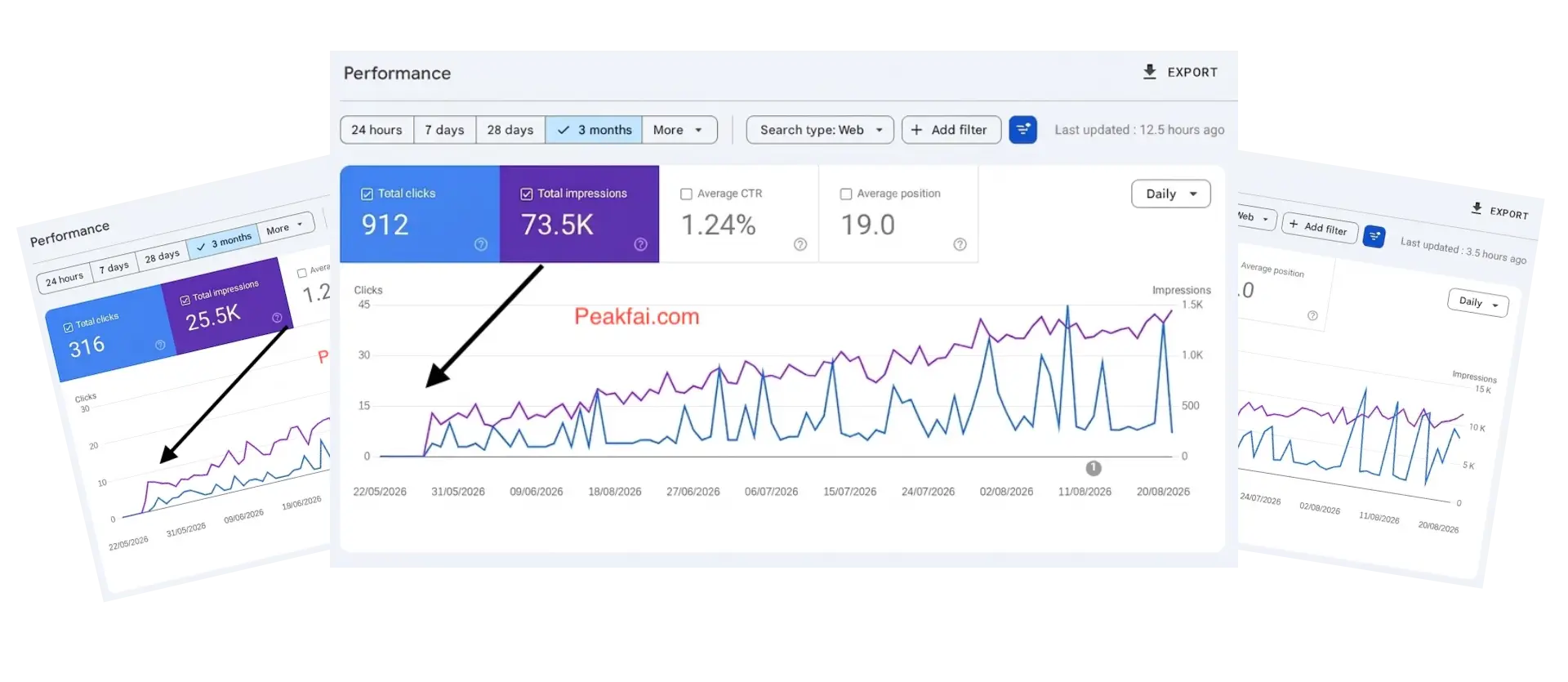
SEO for SaaS
SEO content built for how SaaS buyers actually search
Comparison pages, alternative-page keywords, and product-aware content: researched, written, and published automatically, with AI-search visibility tracking built in.
Why generic AI content falls short for SaaS
- Comparison and alternative-page keywords convert well, but they take real research to find and get right.
- Generic "AI blog writer" content doesn't understand your product deeply enough to write comparison pages that hold up.
- AI search is becoming a real buyer-research channel, and most SaaS content still targets Google alone.
Research grounded in your real competitors
Keywords are scored by real difficulty and buyer intent, not just search volume. The easiest, highest-converting terms for your specific product category publish first.
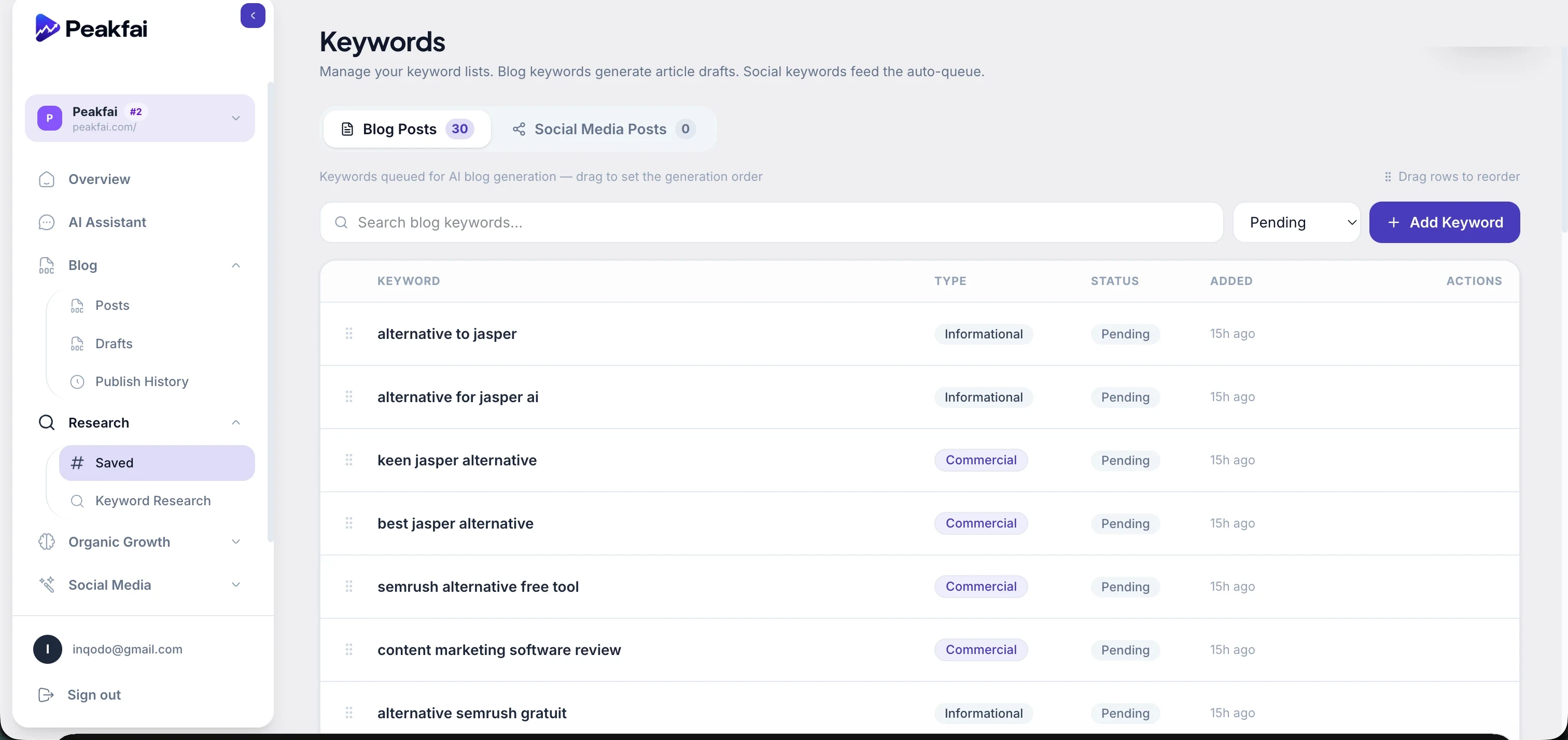
Why comparison and alternative pages matter more than blog volume
A SaaS buyer searching "[your category] software" is early in their research. A buyer searching "[competitor] alternative" or "[you] vs [competitor]" is close to a decision: they already know the category exists and are choosing between specific vendors. Those searches convert at a different rate than top-of-funnel blog content, which is why they're prioritized first rather than treated as one keyword type among many.
The trade-off is that comparison pages are harder to get right with generic AI writing. They need to accurately represent what a competitor actually does, not a strawman version that's easy to beat. That's the research step's job: pulling in what's publicly true about competitors before the page gets written, rather than writing confidently about a product it hasn't looked at.
What you get
- Comparison and alternative-page keywords scored by real difficulty and buyer intent
- Content written with real product context, not generic prompts
- AI-search visibility tracking: see if ChatGPT and Perplexity cite you when buyers ask
- A human SEO manager who understands SaaS buying cycles reviews the strategy
Who this isn't a fit for
If your SaaS product is in a highly regulated or deeply technical niche (medical devices, legal software with jurisdiction-specific nuance, developer tooling with API-level detail that changes release to release), the research step still helps, but content in categories like these usually needs a subject-matter expert reviewing every draft before it publishes, not just a general SEO manager. Say so during setup and the review workflow can be configured for a stricter check.
Frequently asked questions
Yes, during setup, Peakfai researches your real competitors and mines what's already ranking for comparison and alternative-page keywords in your category, then writes content grounded in that research rather than generic prompts.
The core pipeline is built around blog content, and the same research and writing engine can be pointed at any keyword-driven page type, including comparison and use-case content, through your keyword queue.
Every post is structured to answer questions directly, which is what gets cited in AI-generated answers as well as ranking in Google. Peakfai's AI-visibility tracking then tests your actual visibility in GPT-4o and Perplexity against real buyer questions.
That's the most common fit: teams without a full-time content hire who still need consistent SEO output. The human SEO manager fills the strategy-review role a content lead would otherwise handle.
A freelance writer needs briefs, keyword research handed to them, and someone managing the publishing calendar. Peakfai handles the research, writing, and publishing as one connected process, with the human SEO manager reviewing strategy instead of managing logistics.
During setup you provide your product details and brand voice, and the research step pulls in your public site and competitor pages, so comparison content is grounded in what's actually true about your product, not a generic template with the tool names swapped in.
Nothing updates automatically. Comparison content reflects what was true at the time it was researched and written. If pricing in your category shifts meaningfully, that's worth flagging to your SEO manager so the relevant pages get refreshed rather than left stale.