Keyword Research
Keyword research that knows what you can actually rank for
Not a spreadsheet of search volume — every keyword is scored by real difficulty against your site's own authority, and categorized by intent, before it ever reaches your content queue.
The four kinds of search intent, and why the mix matters
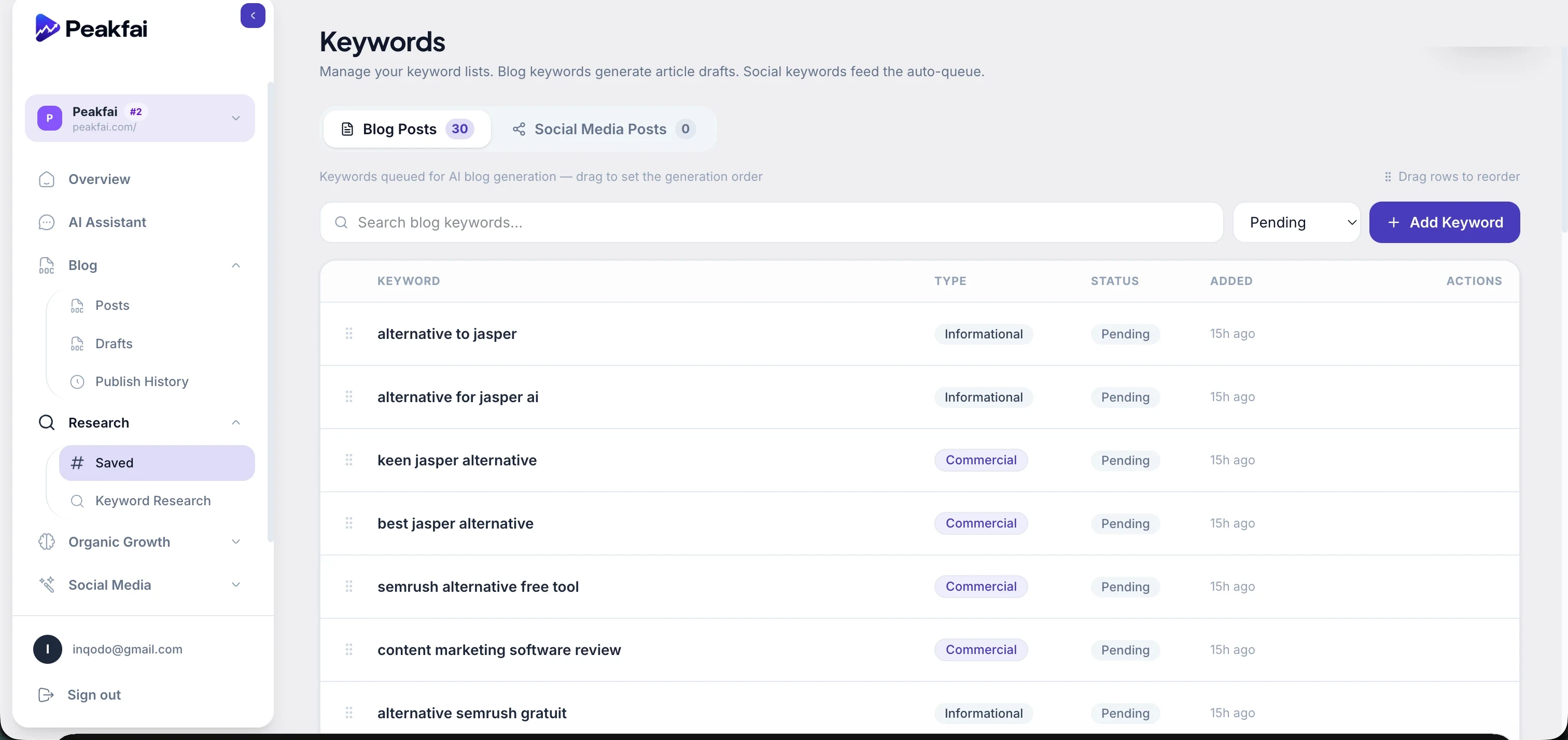
A keyword list that's just sorted by volume treats "how does SEO work" and "buy SEO software" as the same kind of opportunity. They're not — different intent needs a different piece of content, and a different point in your site's growth to realistically target. Every keyword Peakfai researches gets tagged into one of four categories:
Informational
"How does X work," "what is Y": the reader wants an answer, not a purchase. High volume, usually lower competition, and the fastest way for a new site to start earning any organic visibility at all.
Commercial / Comparison
"Best X for Y," "X vs Y": the reader is comparing options before deciding. Lower volume than informational terms, but closer to a decision, which is why these are prioritized once a site has some initial authority.
Transactional
"Buy X," "X pricing," "X discount code": the reader is ready to act. Usually the hardest terms to rank for since they're valuable, but also the highest-converting when a page does rank.
Navigational
Searches for a specific brand or product by name, like "Peakfai login." Not something content strategy targets directly, but relevant to track once a brand has real search demand of its own.
Difficulty, scored against your site, not a generic number
Most keyword tools give you one difficulty score regardless of who's asking. That number is close to meaningless on its own — a "medium difficulty" keyword can be genuinely winnable for a 10-year-old domain with real backlinks and completely out of reach for a site that launched last month. Peakfai's scoring factors in your site's current authority, so the queue reflects what's actually realistic for you specifically, not a one-size-fits-all number.
How this actually helps you rank: the mechanism, not the claim
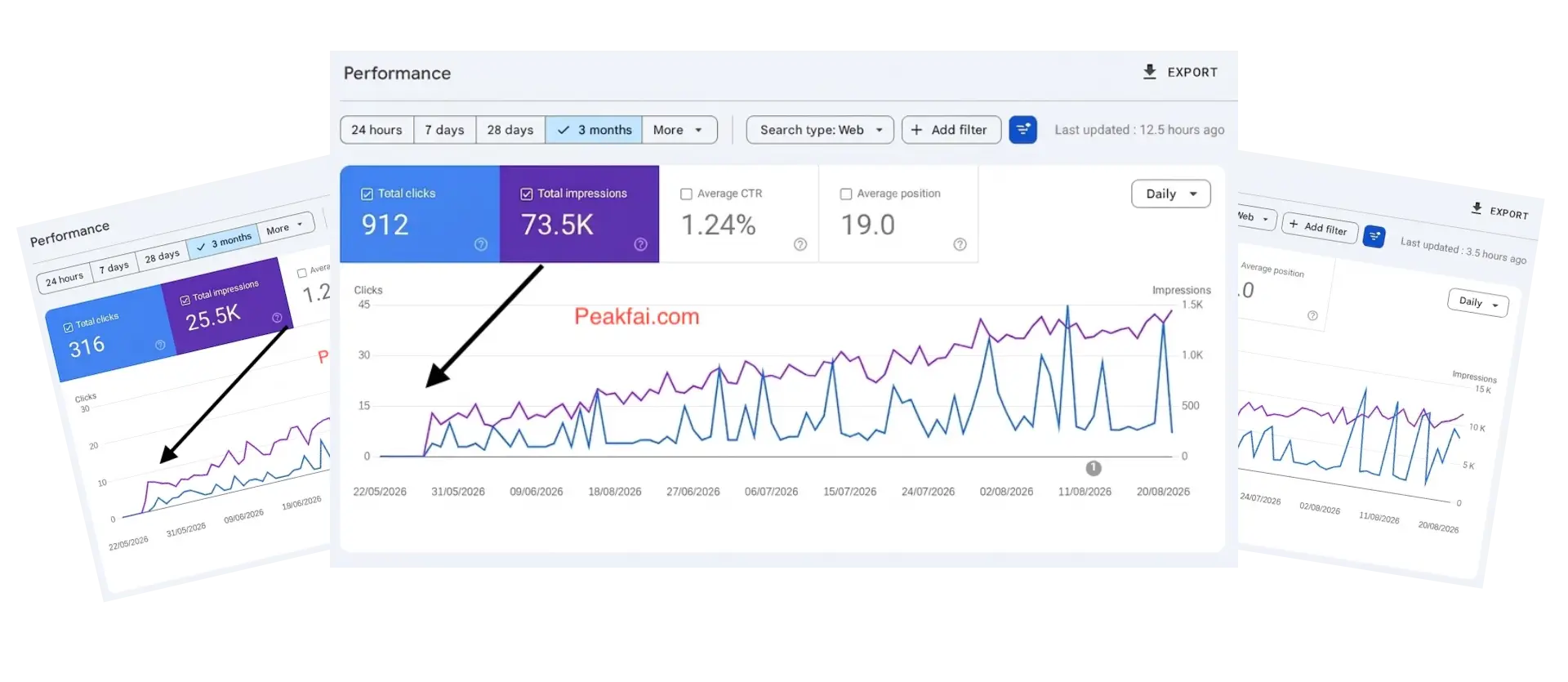
"We help you rank" is an easy thing for any SEO tool to say. Here's specifically what that means: a brand-new site attempting a competitive commercial keyword on day one will almost always fail, not because the content is bad, but because Google has no trust signal yet that the domain deserves to rank for something contested. Starting with lower-competition informational terms the site can actually win builds two things at once: a track record of content that ranks, and internal linking structure between pages that compounds as more get published.
Once a handful of terms are ranking, the site's overall authority has genuinely increased, not just in theory, but in the sense that Google now has real evidence the domain publishes content worth surfacing. That's the point where harder commercial and transactional keywords the queue originally skipped become realistic targets, and the strategy shifts toward them automatically as your human SEO manager reviews progress.
What keyword research alone can't do
Even perfectly-scored keyword research doesn't override a domain with real trust issues: a penalized site, one with a history of spammy backlinks, or one Google has manually flagged needs that resolved first, and no keyword strategy fixes it. It also can't manufacture demand that doesn't exist. If genuinely nobody searches for your category yet, the research will surface that honestly rather than inventing volume that isn't there.
Frequently asked questions
It's not a universal number pulled from a single tool: difficulty is scored against how much authority your specific site currently has. A keyword that's easy for an established domain with years of backlinks can be a multi-year climb for a brand-new site, even though it's technically "the same" keyword. The queue prioritizes what's winnable for your site right now, not a generic difficulty score.
A new site's queue leans toward lower-competition informational terms first, to build initial rankings and trust before attempting anything commercial or transactional. An established site with existing authority can jump straight to comparison and transactional terms that a new domain would have no realistic shot at yet.
Yes, in two ways. First, YMYL niches (health, finance, legal) face a higher trust bar from Google, so the queue is more conservative early on, favoring foundational informational content before attempting competitive commercial terms. Second, transactional-heavy niches like ecommerce get transactional and commercial terms prioritized earlier than a B2B SaaS site would, where comparison content usually matters more.
Real search volume and competition data, plus a look at who's currently ranking for a given term and what their content covers, not a guess based on the keyword's text alone. That's what lets the difficulty score reflect actual competition, not just how the phrase sounds.
The same research step that finds a real, specific question worth targeting also produces the input for AI-search-ready content: a direct answer to one clear question, backed by specifics. A keyword like "best CRM for a 5-person sales team" is both a Google-rankable term and the kind of question ChatGPT or Perplexity gets asked directly. The research doesn't need two separate processes for two channels.
Yes, you can add specific keywords manually at any time, and they'll still get scored for difficulty and intent so you know what you're actually taking on before it uses up a publishing slot.
It replenishes automatically as topics get used, so a live queue doesn't run dry. New keywords get researched and scored using the same seed topics and competitor data from your original setup.