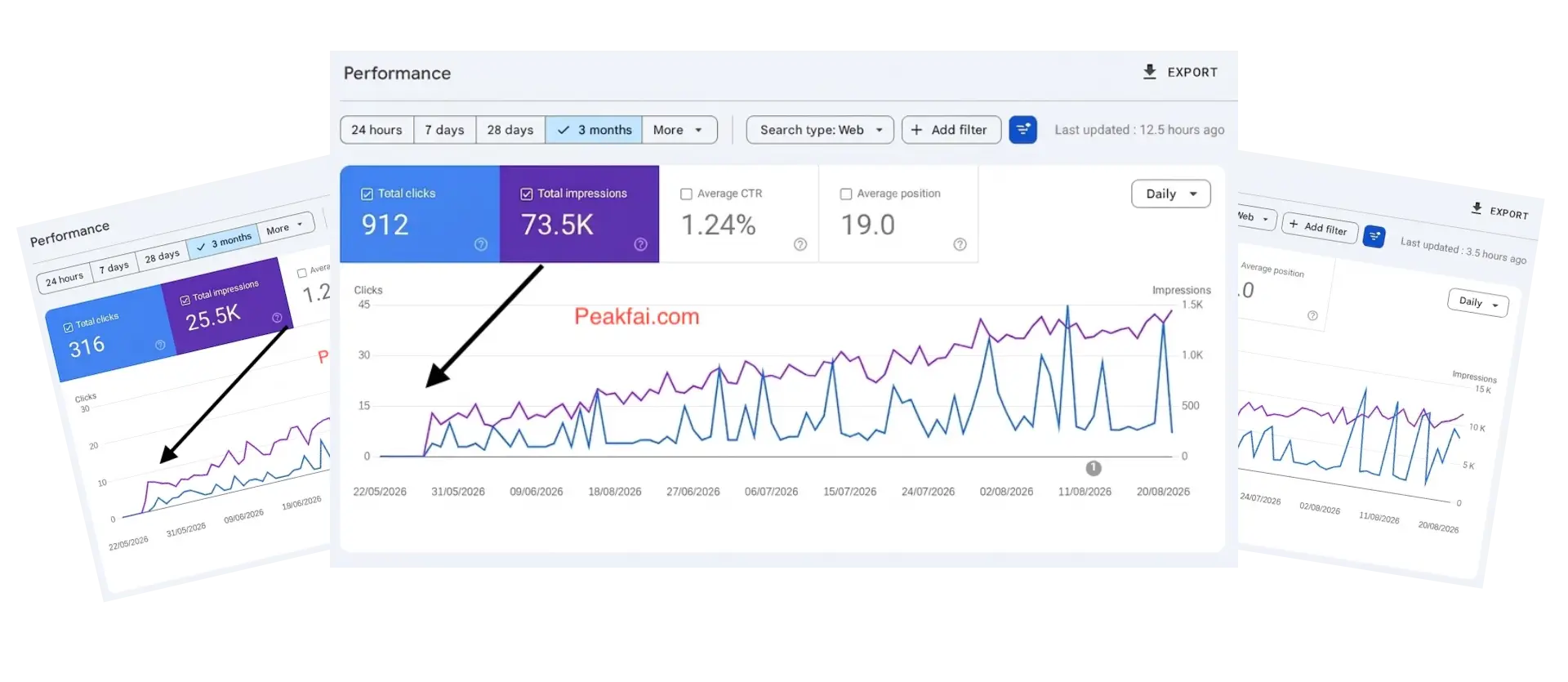
Generative Engine Optimization
Generative engine optimization: earning citations from AI, not just rankings from Google
GEO is what SEO looks like when the reader never clicks a blue link — they read one AI-generated answer and move on. Here's how to be the source it quotes.
Why GEO is worth building for now
GEO is early enough that most businesses in most niches haven't started competing for it — which means the content gap between “cited” and “invisible” is often just one well-written page, not years of backlink-building. That won't stay true forever, which is exactly why it's worth moving on now rather than waiting for the category to mature.
How Peakfai approaches GEO
Peakfai researches the real questions your buyers ask, writes content that answers them directly and specifically (the format generative engines actually cite) and publishes it on schedule. Your AI visibility tracking then shows whether it's working, tested against the same engines your buyers use, not a proxy metric.
GEO, AEO, and LLM SEO: does the difference matter?
Not much in practice. GEO (generative engine optimization), AEO (answer engine optimization), and LLM SEO are three labels the industry hasn't settled on a single name for yet, describing the same underlying shift — search moving from a list of links to one synthesized answer. The specific term someone uses tends to say more about which publication or conference they picked it up from than about a real technical distinction.
What matters is the work behind whichever label you use: direct answers, real specifics, and content structured so an AI system can extract it cleanly. That work is identical no matter which of the three terms ends up winning out.
Related reading
Frequently asked questions
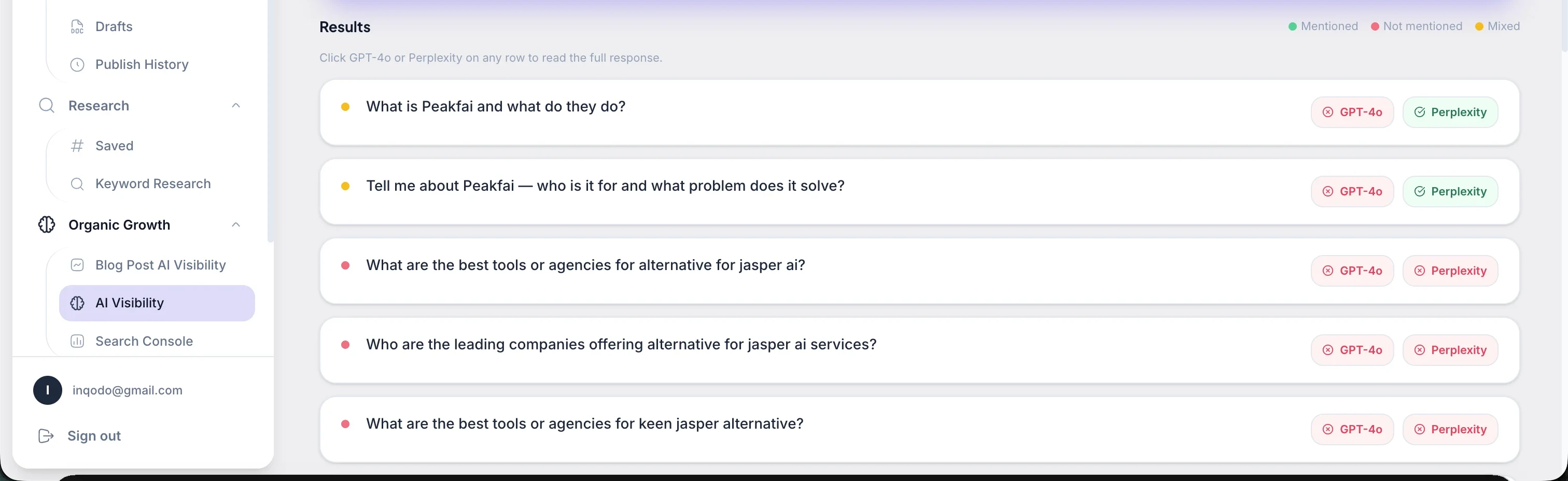
The most useful GEO tools do two things: test whether generative AI engines currently cite your brand for real buyer questions, and help you close the content gaps that explain why they don't. Peakfai does both from the same dashboard: it tracks your citations in GPT-4o and Perplexity, then writes and publishes the specific content needed to earn them.
Generative engine optimization (GEO) is the practice of structuring content so generative AI systems (ChatGPT, Gemini, Perplexity) cite it when synthesizing an answer. It's a response to search behavior moving from typing a query and scanning links to asking a question and reading one generated answer, which changes what "getting found" actually requires.
No, GEO is additive, not a replacement. Google Search still drives the large majority of organic traffic for most businesses, and classic SEO fundamentals (real search demand, genuine expertise, clean technical implementation) still matter for GEO too. The businesses winning at GEO right now are the ones treating it as a second channel worth building for, not the ones abandoning SEO to chase it.
By directly testing: send the real questions your buyers ask to the AI engines they use, and record whether and how your brand is mentioned, alongside which competitors are cited instead. Unlike classic rank tracking, there's no public GEO ranking report to check. You have to run the queries yourself or use a tool that automates it.
Categories where buyers naturally ask comparison or recommendation questions (software, B2B services, consumer products with real alternatives) see the most GEO opportunity, since those are exactly the question types generative engines answer well. Highly local or transactional categories (a specific plumber in a specific city) see less GEO traffic today, since AI engines are weaker at hyperlocal recommendations.
The core discipline (direct answers backed by specifics) transfers across all of them, but each engine weighs sourcing differently. Perplexity leans heavily on live web retrieval, Gemini draws more on Google's existing index and authority signals, and ChatGPT's behavior depends on whether search mode is active. Testing against more than one engine matters because a page can win in one and miss in another.