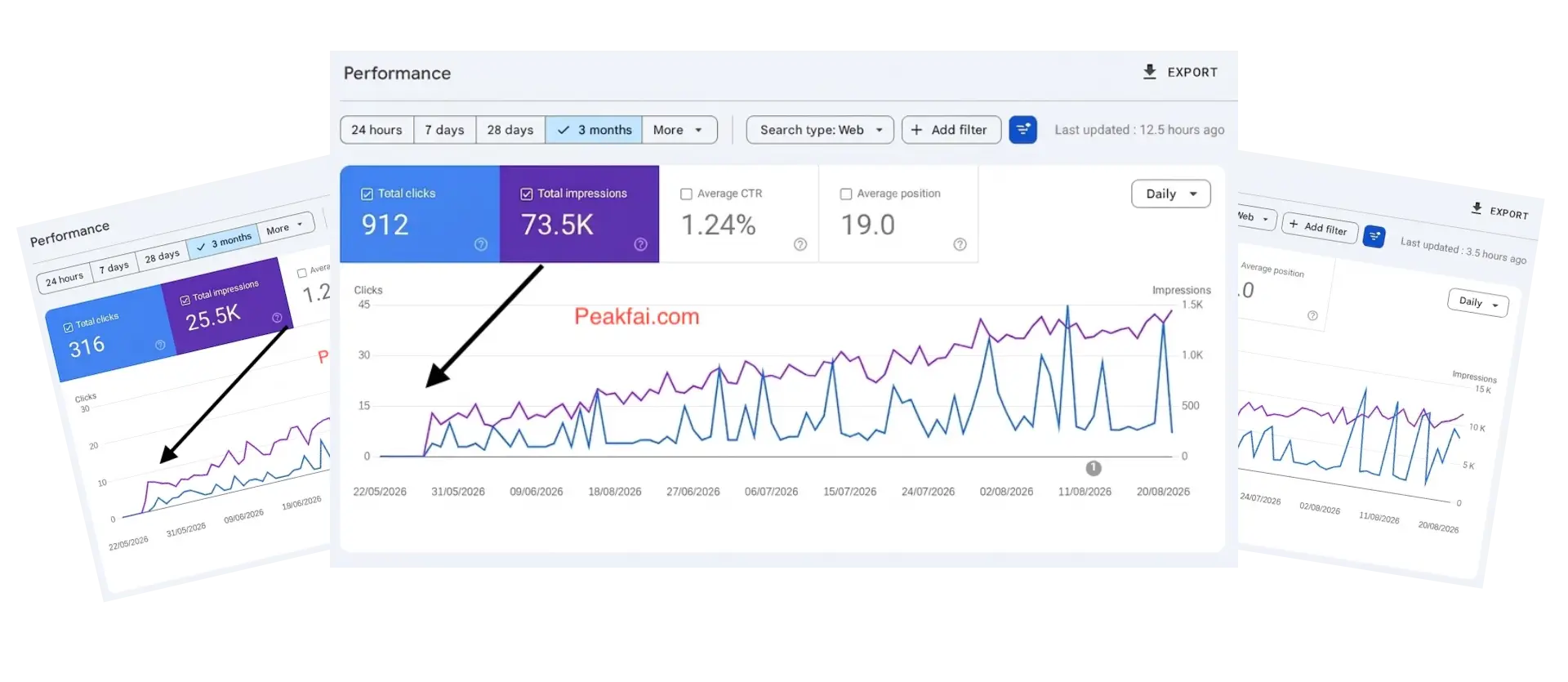
SEO Automation
SEO automation that actually runs itself
Not a scheduler bolted onto a keyword list — a pipeline where research, writing, and publishing hand off to each other automatically, with a human SEO manager reviewing the strategy.
Research runs on its own
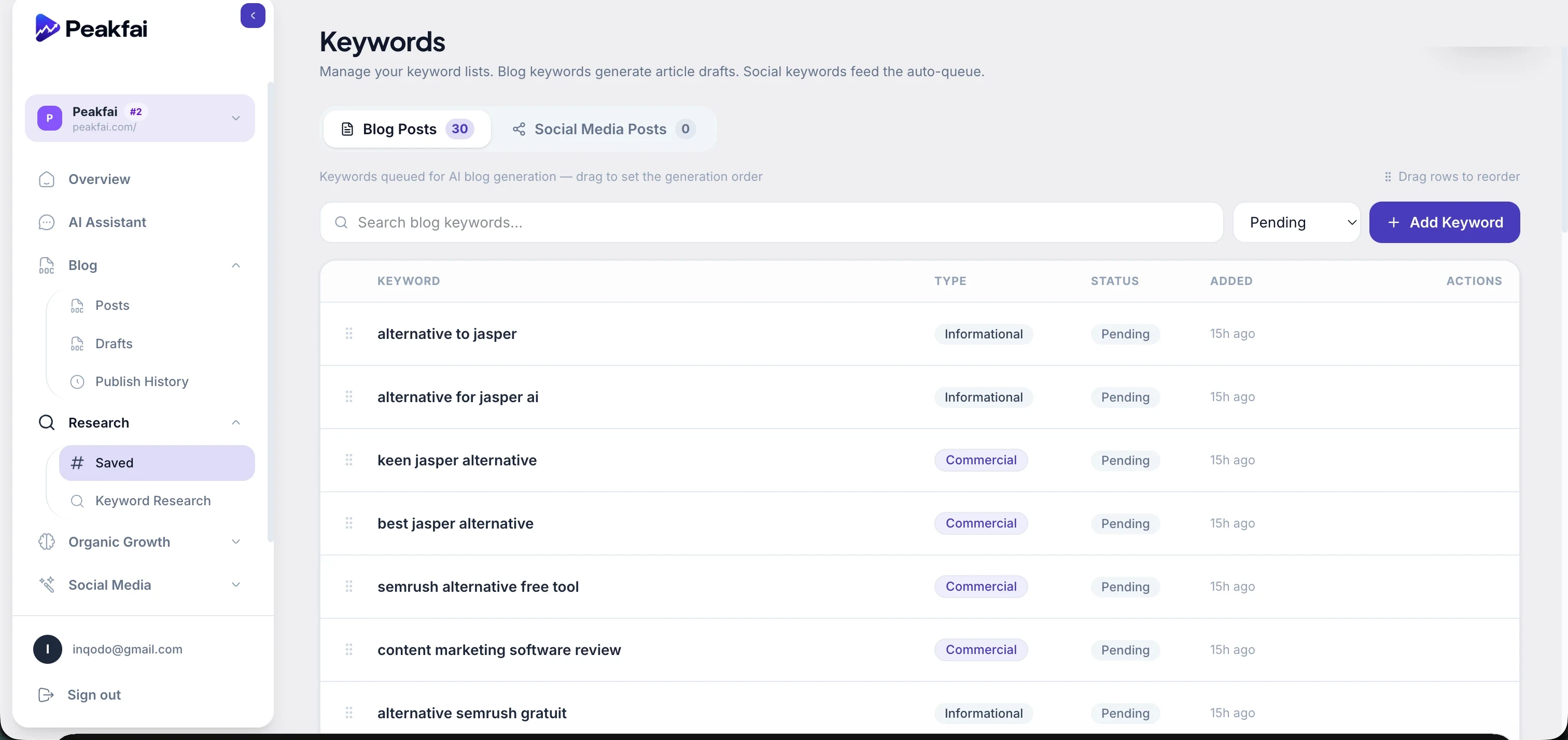
Peakfai scores every keyword by real difficulty and buyer intent, then queues the easiest, highest-converting ones first.
Writing runs on its own
Each post is drafted in your brand voice, backed by research on what's actually ranking for that keyword.
Publishing runs on its own
Posts go live on WordPress on your schedule: review every draft first, or let it run fully hands-off.
The queue drives itself
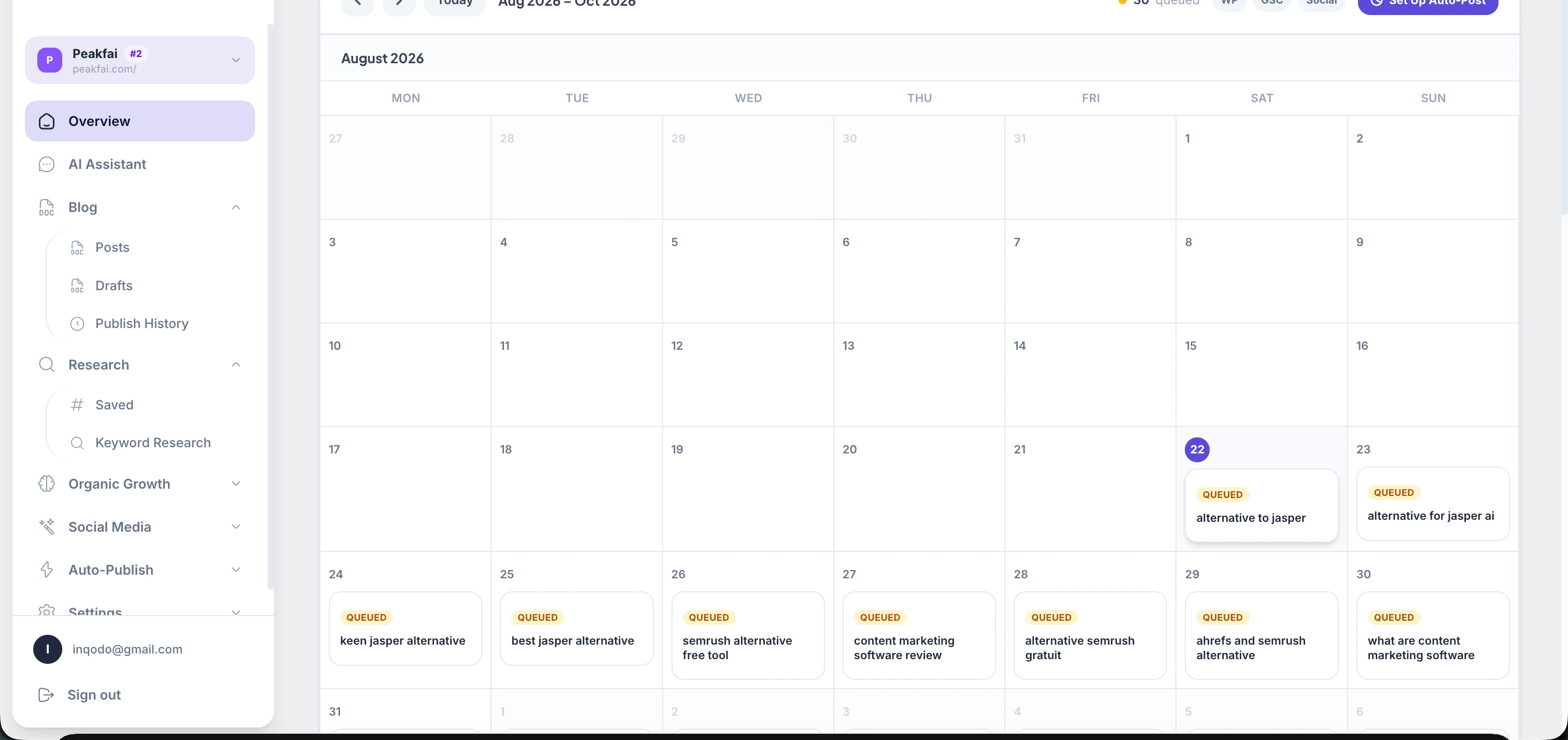
Keywords are ranked easiest-and-highest-converting first, so the automation builds early wins and domain authority before it ever attempts a harder keyword. You can drag to reorder, add your own, or leave it running.
Set the schedule once
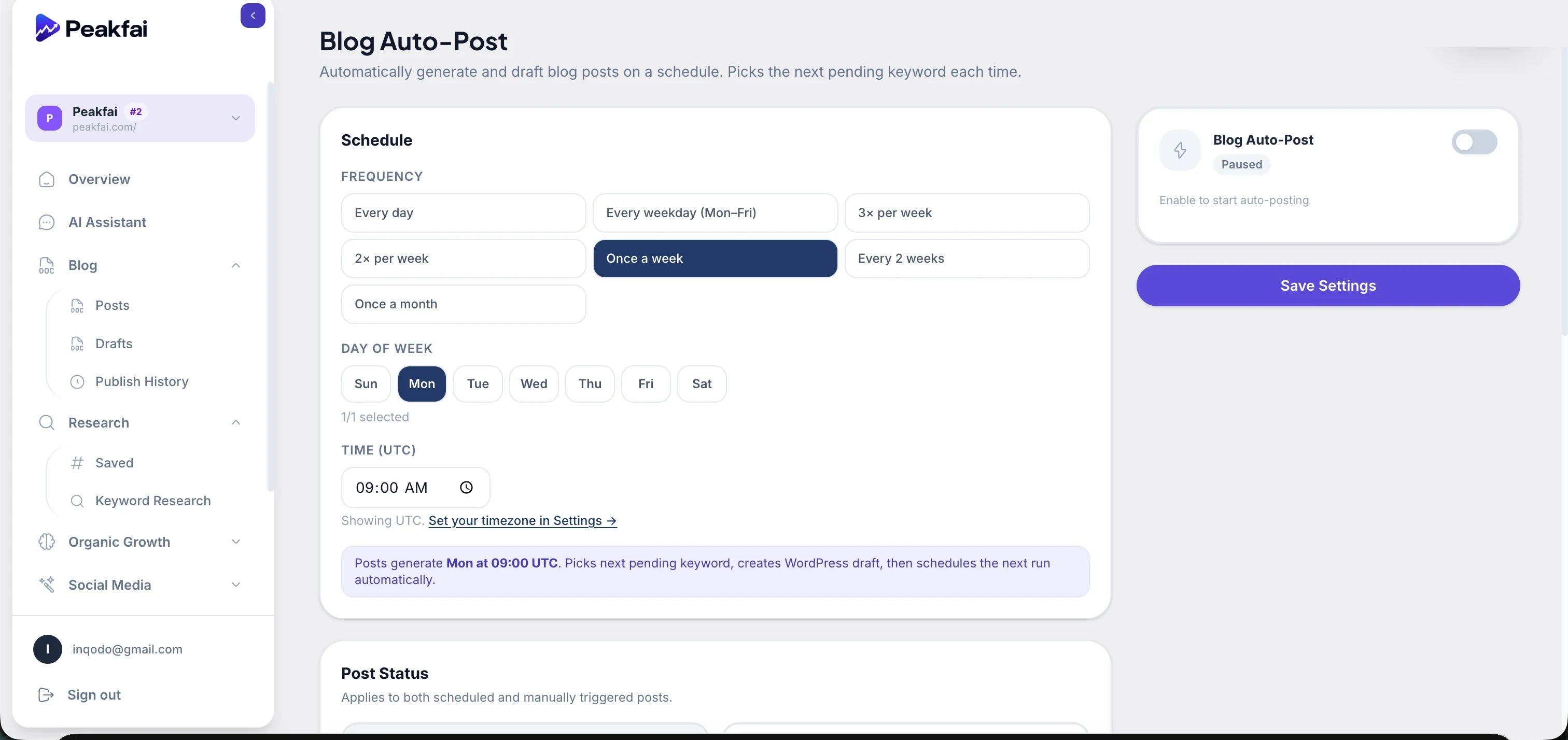
Choose how often posts generate (daily, a few times a week, or on your own custom cadence) and whether they publish immediately or wait for your review. The next run schedules itself automatically.
Why most "SEO automation" tools stop at the writing step
Most tools marketed as SEO automation actually automate one step (usually the writing) and leave keyword research and publishing as separate manual work. That means you're still deciding what to write about, still logging into WordPress to hit publish, and still tracking a content calendar somewhere else. The AI wrote the draft; you did everything around it.
The three steps only compound into real output when they hand off to each other automatically: research feeds the queue, the queue feeds writing, writing feeds the publishing schedule, without a person manually bridging the gap between any two of them. That's the actual difference between automation and an AI writing tool with extra steps.
Where automation still needs a person
Automation runs the pipeline; it doesn't decide whether the pipeline is aimed at the right targets. That's still a judgment call — which is why every plan includes a human SEO manager reviewing the keyword strategy monthly, rather than leaving the whole thing to run unsupervised indefinitely.
Frequently asked questions
Three things: finding keywords worth targeting (scored by real difficulty and buyer intent, not just volume), writing content for them in your brand voice, and publishing it to WordPress on a schedule. A human SEO manager reviews the strategy monthly so automation doesn't mean unsupervised.
Speed without a real strategy behind it produces content that publishes on schedule and ranks for nothing. Google's helpful content guidelines penalize unhelpful content regardless of who or what wrote it. Peakfai's automation is grounded in real competitor and keyword-difficulty data, not just "generate something daily."
Yes. Every post lands in Drafts first by default. You can review, edit, and approve manually, set a review window (e.g. a 24-hour hold before auto-publish), or turn on fully automatic publishing once you trust the output.
You control the frequency: daily, a few times a week, weekly, or every two weeks. The system picks the next pending keyword each run, creates the draft, and schedules the following run automatically.
No, keyword research replenishes automatically as your queue runs low, using the same seed topics and competitor data from your original setup. You can always add specific keywords manually too.
You can remove it from the queue any time, and this is exactly what the human SEO manager's monthly review is for — catching a keyword that looked easy but wasn't before it burns a publishing slot.
No, every setting from cadence to review window to which keywords are in the queue is under your control at all times. "Automation" describes what happens once you've set the rules, not a black box you can't see into or adjust.
A generic AI writing tool produces a draft when you give it a prompt — you still have to do the keyword research, decide what to write about, and publish it yourself. SEO automation here means the research, the topic selection, the writing, and the publishing are one connected pipeline, not four separate manual steps with an AI tool bolted onto one of them.