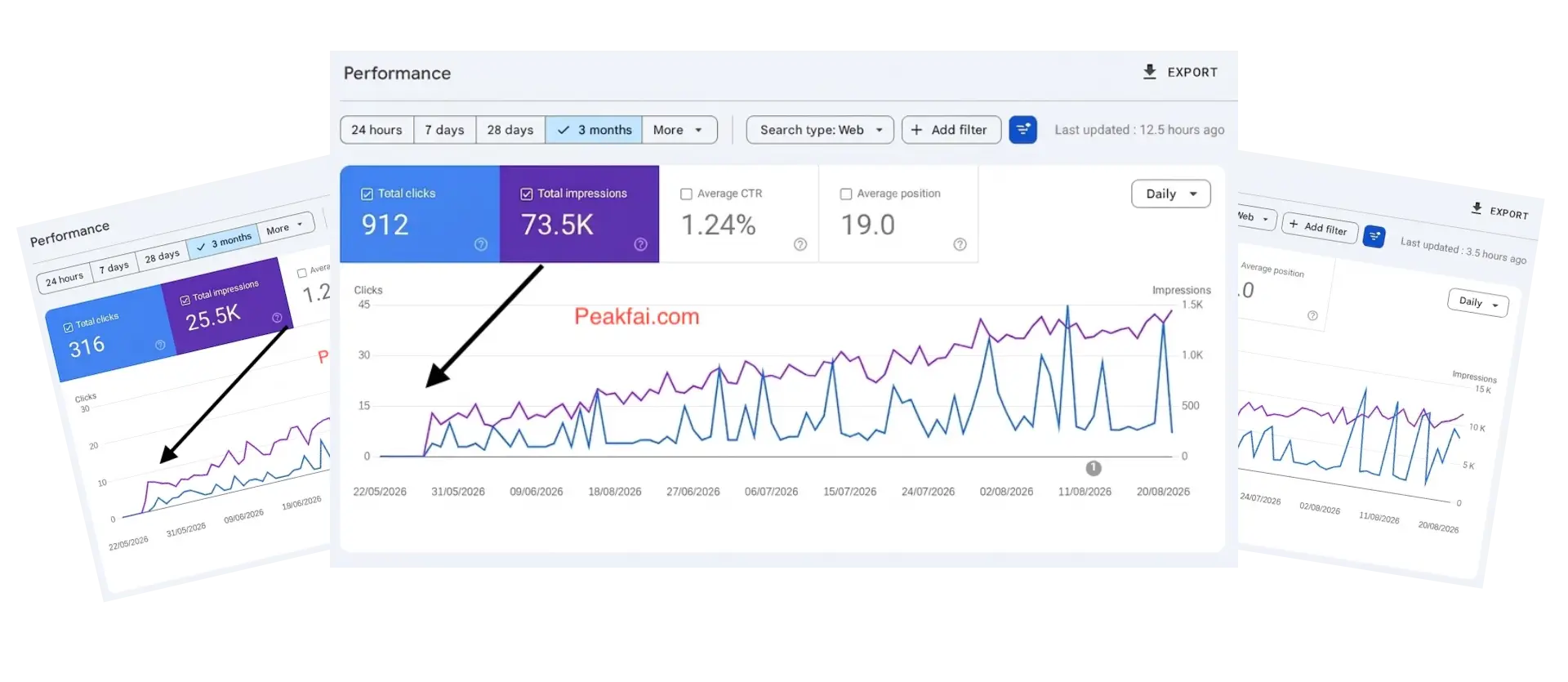
Human SEO Manager
A real SEO manager, included in every plan
Most AI SEO tools hand you an algorithm and disappear. Peakfai pairs the AI pipeline with a human who actually watches your strategy.
Most blog content automation tools hand you an algorithm and disappear. Peakfai pairs the AI pipeline with a human who actually watches your strategy — the difference between keywords that look easy and keywords that actually rank.
- Reviews your keyword strategy every month
- Catches keywords that look easy but aren't
- Tunes your content plan as your site gains authority
- Answers questions directly: no support ticket queue

Why this is the one thing AI alone can't do
AI is genuinely good at generating keyword lists and drafting content quickly. What it doesn't do well on its own is judgment: knowing that a high-volume keyword is a trap for a new site, noticing when a content plan needs to shift as a site gains authority, or catching a strategic mistake before it costs three months of publishing against the wrong targets. That's the gap a real SEO manager closes — reviewing the AI's output rather than replacing it.
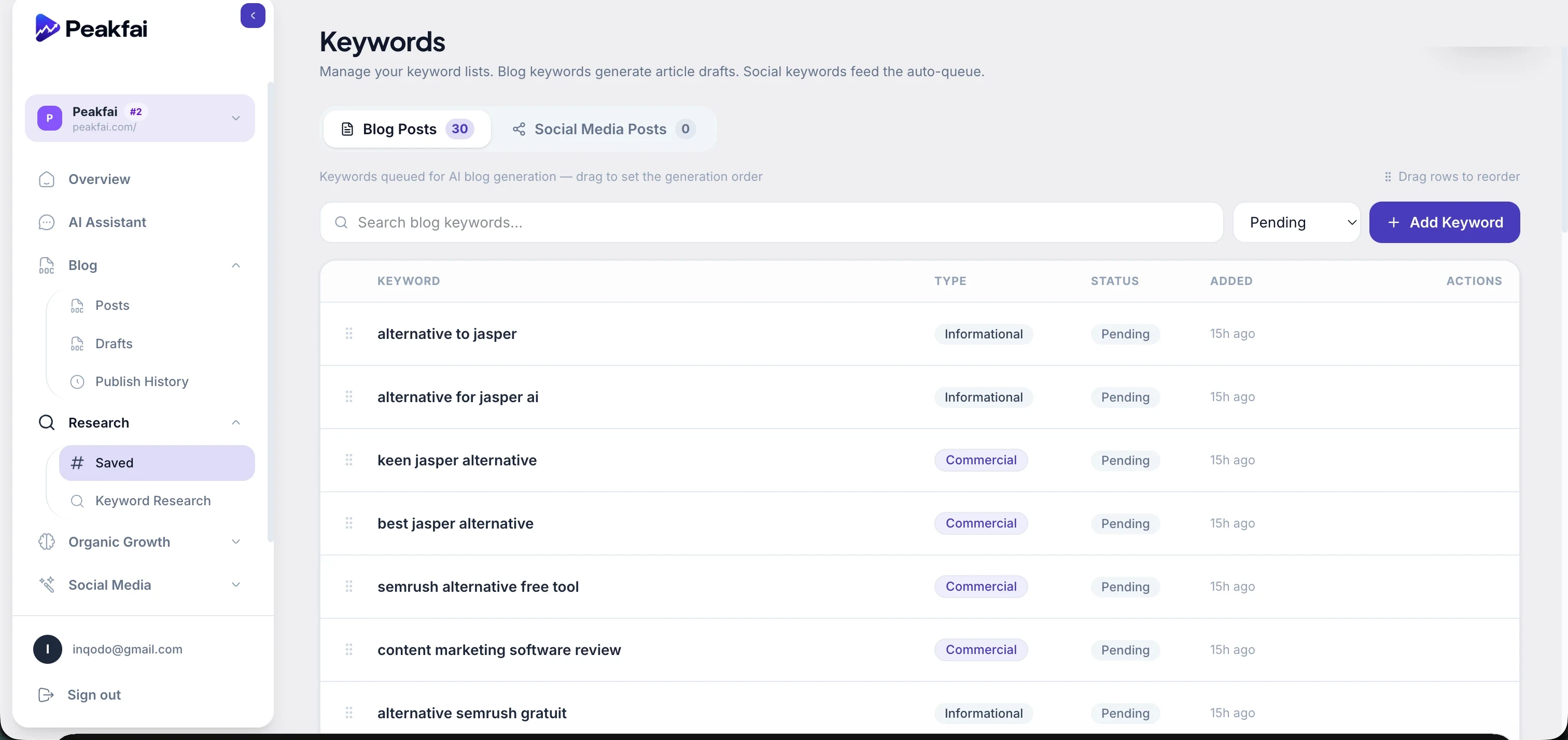
What the monthly review actually looks at
It's not a status-update call — there's no meeting to schedule. The review checks three things: which keywords in the queue are underperforming relative to their difficulty score and should be swapped out, whether the site's growing authority has opened up harder keywords that weren't winnable at signup but are now, and whether the published content is actually matching the search intent it was written for rather than technically covering the topic without answering what people are searching for.
None of this requires you to do anything. It's a review of the automation's own output, not a task added to your plate. You'll see the changes reflected in your keyword queue and content plan, and you can always ask why a specific change was made.
What this isn't
To be direct about the limits: this isn't a full-service SEO agency relationship with custom technical audits, backlink outreach, or site-architecture consulting. It's strategy review focused on keyword selection and content quality within Peakfai's pipeline. If your site needs deep technical SEO work (crawl budget issues, structured-data overhauls, migration support), that's a different engagement than what's included here, and it's worth saying so upfront rather than overselling scope.
Frequently asked questions
A managed SEO service pairs software or automation with a person who reviews the strategy: deciding which keywords are actually worth pursuing, catching mistakes before months of content gets published against the wrong targets, and adjusting the plan as the site's authority changes. Peakfai's human SEO manager does exactly this, reviewing your keyword strategy every month rather than leaving it entirely to an algorithm.
Yes, every plan, including Starter, includes a real human SEO manager reviewing your strategy. It isn't an add-on or a higher-tier-only feature.
A traditional SEO consultant or agency typically charges separately for strategy work and expects you to handle (or separately pay for) the execution: writing, publishing, tracking. Peakfai's human SEO manager reviews strategy inside a platform that also writes and publishes the content, so the strategy and the execution stay connected instead of living in separate invoices and separate tools.
You can override any recommendation: the SEO manager's review is guidance, not a gate. In practice, most disagreements come down to a keyword that looks appealing because of its volume but has weak buyer intent or unrealistic difficulty for your site's current authority; the manager's job is to flag that trade-off clearly so you can make an informed call either way.
Your account is reviewed consistently rather than bounced between different reviewers each month, so recommendations stay grounded in the history of what's already been tried on your specific site, not restated from scratch each time.
Through the dashboard, without going through a support ticket queue, the point of including this on every plan is that strategy questions get a direct answer instead of sitting in a generic support inbox.
The most common trap is a keyword with decent search volume but real competition from sites with far more domain authority, a new or small site publishing against it will see the post sit on page 3 or 4 indefinitely, using up a publishing slot that could have gone to something winnable. The review catches this before it burns months of the calendar.