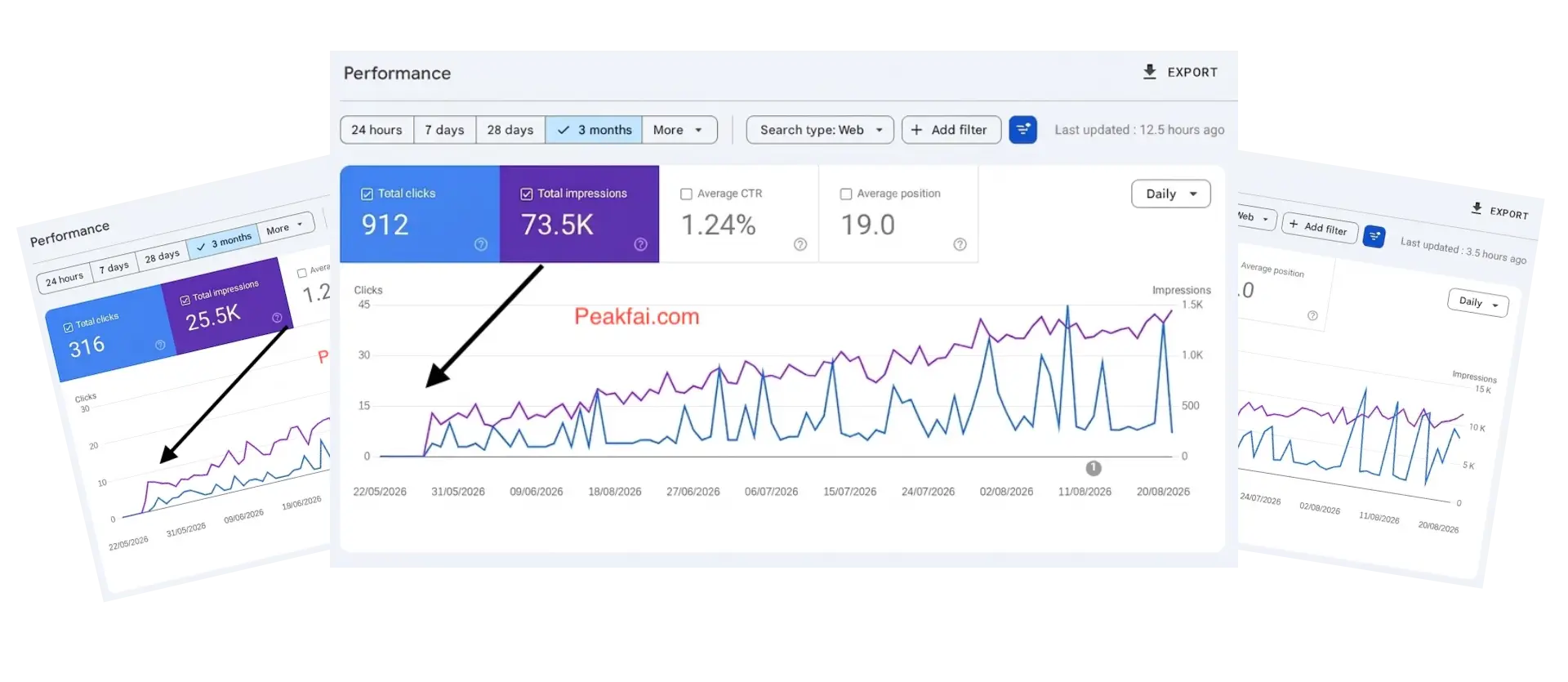
SEO for Publishers
High-volume content publishing, built for AI search too
Scheduled content at whatever frequency you need, with editorial review and AI-search visibility tracking, not just publishing volume for its own sake.
Why volume alone isn't the whole strategy anymore
- Publishing volume alone doesn't guarantee rankings: most content sites compete on topical authority, not just output.
- A growing share of readers get their answers from AI-generated summaries instead of clicking through to an article.
- Editorial review doesn't scale well when publishing frequency increases past what one editor can keep up with.
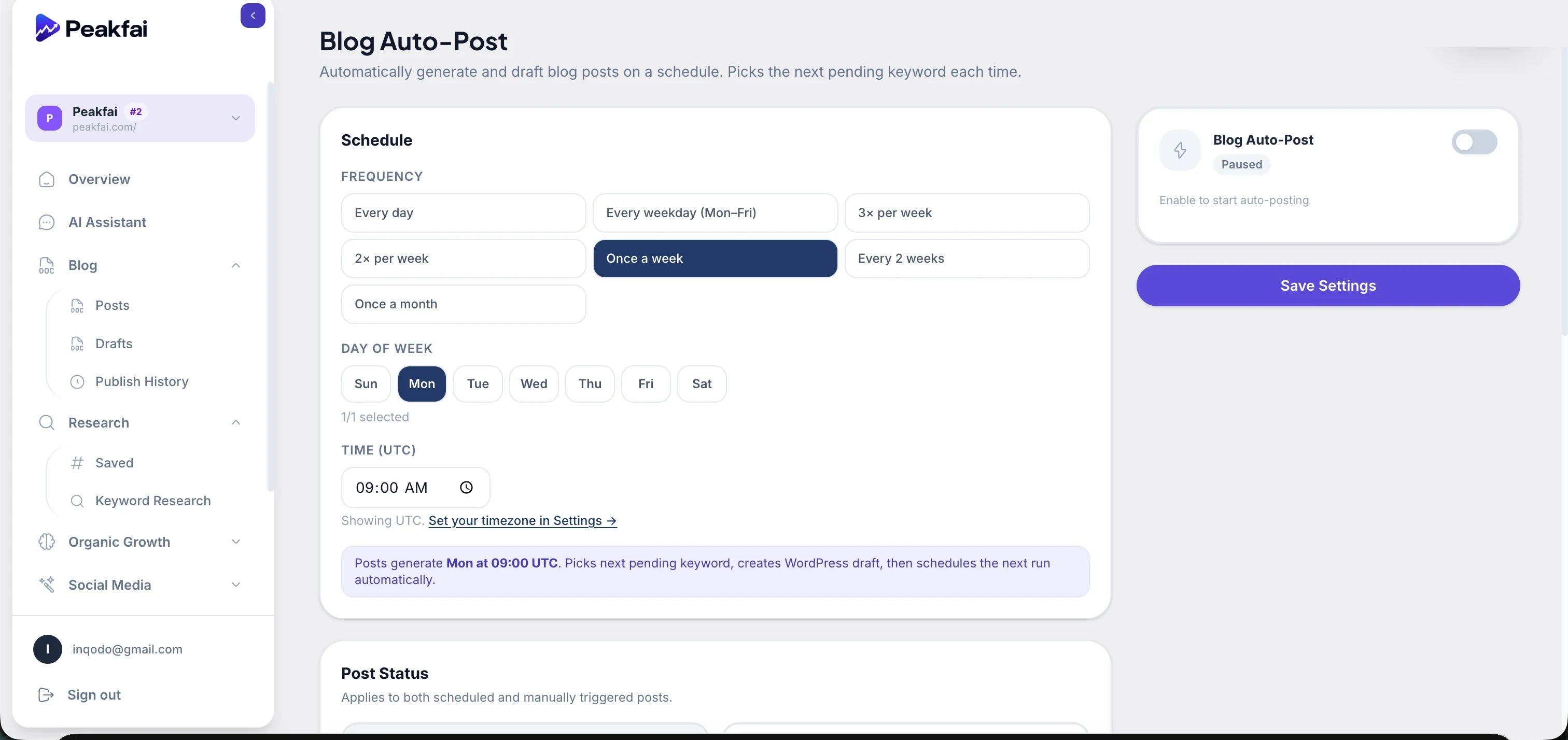
Set the cadence, review or automate
Publishing frequency is configurable up to daily, with drafts landing for review first by default. Switch to fully automatic once the output has earned your trust.
Volume without quality is a losing trade
It's worth being direct about the risk in this segment specifically: publishers are the group most tempted to treat AI content as a volume play, and that instinct tends to backfire. Search engines and AI systems alike are getting better at recognizing thin, repetitive, low-effort content at scale, and a site that publishes a lot of it risks its existing rankings, not just failing to gain new ones.
The keyword difficulty scoring and human review exist as a check against exactly this failure mode. High cadence is available if a topic genuinely supports it, but nothing in the system rewards publishing for its own sake. A queue that's run dry of well-scored topics should slow down, not get padded with filler to hit a number.
What you get
- Content scheduled at whatever frequency your site needs, daily included
- Drafts land for editorial review before publishing, or auto-publish once you trust the pipeline
- AI-search visibility tracking: see whether your site gets cited when AI engines answer reader questions
- A human SEO manager reviews topical strategy, not just individual posts
Where a human editorial team still matters
For investigative, opinion, or exclusive-reporting content (anything where the value is a specific writer's access, voice, or original reporting), this isn't the right tool, and it isn't trying to be. It's built for the research-and-answer content that supports that work, not to replace the reporting itself.
Frequently asked questions
Yes, the schedule supports daily posting, with the keyword queue replenishing automatically so there's always a next topic ready to draft.
Every draft can land in a review queue before it goes live, with a configurable hold window, or you can turn on fully automatic publishing once you trust the output. It's the same choice available on every plan.
Peakfai's AI-search visibility tracking tests whether your site is cited when AI engines answer reader questions in your topic area, a growing channel that's separate from, and doesn't require sacrificing, your Google traffic.
Peakfai's automated pipeline and human-written content can run side by side. Nothing about connecting Peakfai to your WordPress site prevents your existing editorial team from continuing to publish their own content too.
The keyword queue replenishes automatically as topics get used, scored by real difficulty against your site's current authority, so a daily publishing cadence doesn't mean scraping the bottom of a shrinking keyword list within a few weeks.
No, and this is worth being direct about: thin, repetitive content at high volume can hurt more than help. The keyword scoring and human review exist specifically to keep volume from turning into filler; if a topic doesn't clear the bar for something genuinely useful to search for, it shouldn't be in the queue regardless of how much publishing capacity is available.